Most house fires give you very little time. From the first smoke alarm to a room full of smoke can be as little as two or three minutes, and in that window there is no time to think, only to act. That is exactly why a fire escape plan matters. When everyone in the house already knows where to go and how to get there, those two minutes are enough. When they do not, they rarely are.
Building a plan is simpler than it sounds, and you can do it in an afternoon. Here is how to put together a fire escape plan your whole household can follow, even half-asleep in the dark.
Start by walking the house
Grab a notepad and walk through every room. For each one, find two ways out, usually the door and a window. The second exit matters because fire or smoke can block the obvious route. Check that windows open easily and that any security bars have a quick release. Sketch a simple floor plan and mark every door and window. You are not making art, just a map the family can picture in a hurry.
Agree on one meeting point
Pick a single spot outside, a safe distance from the house, where everyone gathers once they are out. A tree, a lamp post, the neighbour's driveway. It has to be somewhere you can all name without thinking. This is the part that saves firefighters precious time, because a quick head count at the meeting point tells them instantly whether anyone is still inside. Make the rule absolute: once you are out, you stay out, and nobody goes back in for anything.
Know the two-minute drill
A fire evacuation plan only works if the body already knows it. Practise the route twice a year, once in daylight and once after dark, because a smoke-filled house at night feels nothing like the same hallway at noon. Teach everyone to feel a closed door with the back of the hand before opening it, to stay low under the smoke, and to close doors behind them to slow the flames. If you have young children or older relatives, decide in advance who helps them out.
Learn the RACE routine
Many workplaces teach a simple memory aid called race fire safety, and it works just as well at home. RACE stands for Rescue anyone in immediate danger, Alarm by alerting others and calling emergency services, Confine the fire by closing doors, and Escape, or Extinguish only if the fire is tiny and you have a clear exit. The order is the point. People matter first, property last, and if there is any doubt at all, you leave.
Pack a small go bag
Keep a compact go bag near your main exit with the things you would hate to lose and might not have time to gather: spare keys, copies of important documents, a torch, a phone charger and any essential medication. You are not packing for a holiday. The bag should be something you can grab in one motion on the way out, and never a reason to slow down or turn back.
A household escape plan works because it is drawn rather than described, and everyone can see the same routes at the same time. That is also why families preparing for wildfire or hurricane evacuation keep printed state maps alongside the household plan, since regional routes matter once you leave the neighbourhood. Anything that has to work under pressure should exist on paper as well as on a screen.
Test the alarms that buy you the time
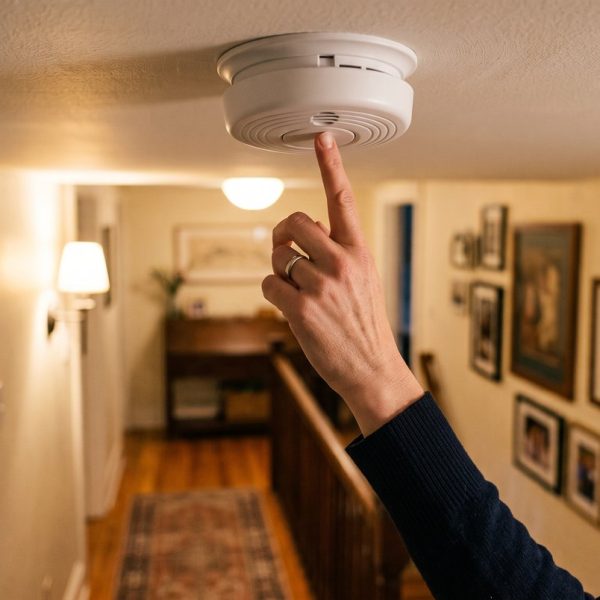
None of this works without a working smoke alarm, because the whole plan depends on early warning. Test every alarm monthly, replace the batteries once a year, and fit alarms on every level of the home and outside sleeping areas. A plan is only as good as the seconds it gives you, and the alarm is what creates them.
Household planning of this kind only works if everyone actually sees it, which is increasingly a distribution problem rather than a content one. Community groups have moved onto social platforms almost entirely. Local organisations that buy instagram followers to look established usually find that reach without trust achieves very little.
Plan for upstairs and locked doors
If bedrooms sit above the ground floor, buy a fire escape ladder that hooks over a window sill and store it where it can be reached in seconds. Show everyone how it works before you ever need it, because fumbling with an unfamiliar ladder wastes the very time you are trying to save. Keep door and window keys in the same place every night so nobody is hunting for them in the dark, and never lock a door in a way that could trap people inside. Small habits like these turn a good plan into one that actually holds up under pressure.
When not everyone speaks the same language
In shared buildings and mixed neighbourhoods, safety information has to reach people who may not read the local language, and emergency responders increasingly plan for this. Clear medical and safety details save lives only when they are understood, a point the team at PoliLingua make in their piece on why accurate medical document translation matters. If you live with someone who is more comfortable in another language, make sure the plan is explained in words they fully understand.
Keep your fire escape plan alive
A fire escape plan is not a document you file away. Review it whenever the household changes, after a new baby, a move, or a relative coming to stay. Fire is not only a household risk either. The way a wildfire spreads outdoors follows the same brutal logic of fuel, heat and speed, which is why communities in fire-prone areas rehearse evacuation the same way families should at home. For a broader grounding, the overview of fire safety is a useful reference, and the official guidance at Ready.gov walks through home fire planning step by step.